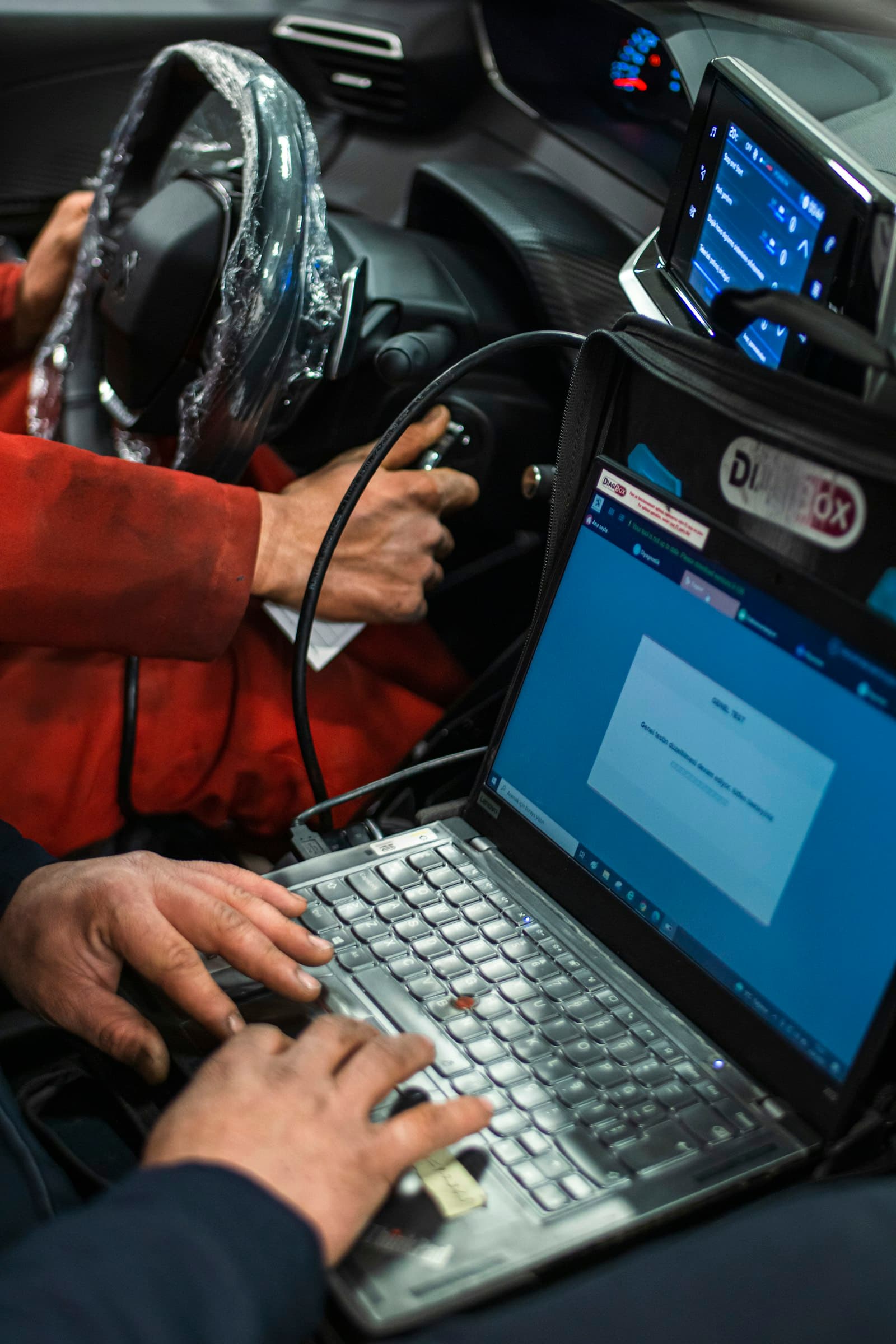
Modern vehicles run dozens of control modules across miles of wiring. An electrical complaint can look like a dead battery and turn out to be a circuit that never shuts off, or look like a failing module and turn out to be a corroded ground.
This is diagnostic work more than parts work. We test circuits, check voltage drops, and follow the fault to the point where it actually occurs.
Batteries, alternators, starters, wiring, grounds, and the electronics they feed — we handle straightforward replacements and the complex diagnosis other shops hand back.
How we find the fault
Modern vehicles run dozens of control modules across miles of wiring, so an electrical complaint rarely points straight at the failed part. We test the battery, alternator and starter along with their cables and connections, use voltage-drop testing and wiring diagrams to narrow the fault to one section of a circuit, and check the circuit again after the repair to see whether the fault has cleared. Intermittent faults have to be observed before they can be chased, so we confirm the condition first.
Charging problems that look like a bad part
A hard-starting car does not always need a new battery or alternator. In one documented repair, an undersized aftermarket wire between the alternator and battery was the cause, and the alternator itself tested good. In another, a car with only 1,200 miles had a weak battery and an intermittently failing alternator, and power surges had already damaged the power control module. Testing the whole charging and starting system is what separates a good part from a bad connection.
What you get
We explain what we found and what the options are, and nothing is added without your approval. Our electrical repairs are covered by our 12-month / 12,000-mile warranty, and we work on all makes and models, including domestic, Asian and European vehicles, diesels and hybrids.